Tuesday, July 24, 2012
New Blog, New Platform
So, there's a new blog I've got going, and I'll just be letting this one fade away.


Monday, April 30, 2012
A Quick Trip into NYC: A Collage
I wanted to see the Cindy Sherman exhibit at MOMA, and Priceline can lead to a great, cheap hotel room before tourist season. I also liked the chance to get away from working, even on my sabbatical. Though I check into Foursquare and GetGlue when I travel, I don't necessarily check email, Facebook, or Twitter. I do other things. Here's evidence.

I love storefronts at night.
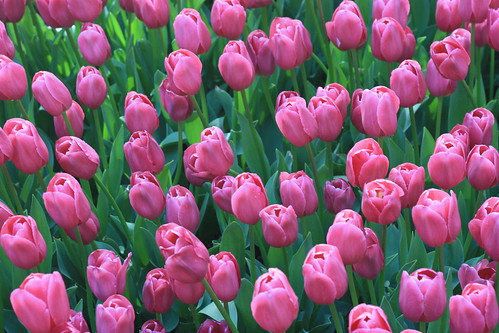
Flowers are blooming.
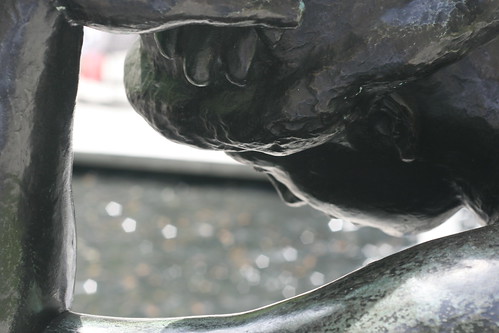
I love a good sculpture garden, too.
I heard this song for the first time last night, downloaded it, and listened to it on repeat.
And Cindy Sherman? Absolutely stunning. Yes, you can see her photography online everywhere, but it's very different seeing it as she intended it, as large or small. Her career parallels the feminist movement from the 1970s to today in fascinating ways. As I said on Twitter, I might be prepared to argue she is the most amazing living artist still working today.
Sunday, April 1, 2012
It's National Poetry Month! What Are You Writing?
It's National Poetry Month! Many of us will be seeing a lot of poems, either famous or written in the previous ten minutes, posted on blogs and Facebook for the month. A lot of people will write a poem a day. I haven't written poetry since my first year of graduate school, and I haven't felt the urge to do so since. But I do have the incredible urge to write nonfiction. Being on sabbatical means I am supposed to be writing, so I have a plan for the month that may not celebrate poetry but will get me writing.
I have a lot of writing books, some focused on poetry, some on nonfiction, but many just on writing/journaling in general. They are filled with exercises of all types. So, each day of April, I will pull a book off the shelf, flip to a random page, and write in response to that exercise. This is in addition to the actual nonfiction writing I have already planned to do this month, which is revising some essays and getting them ready to go out to journals. And I will be doing these exercises with the larger context of the essays I'm writing (all about my undergraduate years) in mind, allowing them to push me in new directions and explore something I had not already explored.
Today, I had to write an ode to something ordinary. I set my timer for twenty minutes and ended up writing well over a page. No, I don't plan on posting what I'm writing. I have learned that my first drafts are pretty much all telling, and I have to transform that into showing--into a narrative--during revision. And a big point of doing this is to write without fear, without the editor in my mind getting any attention. That means, for now, writing alone. But I should end up with over thirty pages of random material by the end of the month. Hopefully.
And don't be surprised if I ask people for random numbers on Twitter or Facebook. I may ask for numbers between one and two hundred, turn to that page in a book, and do that exercise.
What are YOU writing this month?
I have a lot of writing books, some focused on poetry, some on nonfiction, but many just on writing/journaling in general. They are filled with exercises of all types. So, each day of April, I will pull a book off the shelf, flip to a random page, and write in response to that exercise. This is in addition to the actual nonfiction writing I have already planned to do this month, which is revising some essays and getting them ready to go out to journals. And I will be doing these exercises with the larger context of the essays I'm writing (all about my undergraduate years) in mind, allowing them to push me in new directions and explore something I had not already explored.
Today, I had to write an ode to something ordinary. I set my timer for twenty minutes and ended up writing well over a page. No, I don't plan on posting what I'm writing. I have learned that my first drafts are pretty much all telling, and I have to transform that into showing--into a narrative--during revision. And a big point of doing this is to write without fear, without the editor in my mind getting any attention. That means, for now, writing alone. But I should end up with over thirty pages of random material by the end of the month. Hopefully.
And don't be surprised if I ask people for random numbers on Twitter or Facebook. I may ask for numbers between one and two hundred, turn to that page in a book, and do that exercise.
What are YOU writing this month?
Thursday, February 2, 2012
Christopher Hitchens and Joshua Bell
(I'm taking an online writing class on medical narrative through Creative Nonfiction. I was just getting ready to post this on our discussion board, but I could tell it was going to be a long one by discussion board standards, so I'm making it a blog post.)
After reading the essays for this week, I cannot help but compare Christopher Hitchens and Joshua Bell. First, I have to be honest: I have never really been a fan of Hitchens. I would not say I actively dislike his work, but I have rarely finished one of his pieces. I start reading, and something annoys me, so I move on. I think, after reading "Trial of the Will," my problem is that a masculine bravado seems to permeate his work. "Arrogance" has never felt like the right word. But when Hitchens mentions Nietzsche's bravado, that word clicked with me. Hitchens and I have just lived very different lives, which is relevant because the life of the reader is as much a part of an essay as the life of the writer. Hitchens is smart and well-read. There is nothing wrong with his writing. He just has a view of the world that clashes greatly with mine. The value of reading sometimes rests in the text's ability to make us see things anew. Other times, it's just annoying.
Hitchens writes about philosopher Sidney Hook and how he wanted to die after suffering a stroke from an angiogram given after congestive heart failure. He is in great pain, his family is in pain, but doctors deny his plea to stop all life-supporting procedures. Hitchens is suffering from esophageal cancer (and its treatment) when he writes his essay. Hitchens writes, "I haven’t sailed as close to the bitter end as he [Hook] had to do. Nor have I yet had to think of having such an arduous conversation with a physician." That just stuns me. He has never thought about having a conversation with doctors about what life-saving measures he does or does not want performed on him? That is either because of ignorance or bravado (okay, as I write, I'm starting to wonder if "arrogance" should be the word I use), and Hitchens is not ignorant. But how could he have never "had to think" about taling with his doctors about end-of-life decision making, especially after his own father died of esophageal cancer in 1987. Is it just because I watched so many die of AIDS when I was younger and that I ended up marrying someone who because his family's patriarch at 37 that I have thought about my death and that he and I have talked about what we do and do not want? Is it just because I have been lucky enough to work with medical students at UConn and had discussions with them about end-of-life issues? That right there is one big example of how we just look at the world so differently and why I am perhaps not drawn to his writing and its grounding in literature and philosophy, whereas my essays are grounded in experience first.
Ian McEwan's "Christopher Hitchens, Consummate Writer, Brilliant Friend" is very well-written. I can appreciate how he sets the scene of Hitchens in the hospital, especially a hospital I have been in myself. I am really interested in how the narrator of the essay is not the main character in the essay; as someone who writes memoir, that's not what I usually do. But my appreciation for it is mainly intellectual. Hitchens was not someone putting on an act, and I respect that.
Now, Joshua Bell who is a primary subject in "Pearls Before Breakfast" fascinates me, and it is because he does not seem to have the bravado I see in Hitchens. A world-class violinist plays on a subway platform during rush hour to see what happens. Now that's performance art! I actually enjoyed this essay so much I do not want to say a lot and ruin it for those who have not read it. But I really enjoyed his portrayal in this essay and his awareness of how his greatness may not always translate. I just really grew to like this guy as I read about his responses to the video of the performance.
If the goal of this week is to think about structuring a narrative, and if E. M. Forster says that a story is successful if the reader keeps reading to find out what happens next, then "Pearls Before Breakfast" is the greatest success of these three for me. I convert the readings to PDFs so I can read them off-line, highlight, and annotate. That essay was twenty-five pages long, but I kept feeling the pull to read more. The other two came out to around six pages each, and I'm not sure I would have finished either one.
That's not to say I was thrilled with Weingarten's writing. His audience clearly does not include me. He had a few snide things to say about some of the people waiting in line at a busy kiosk buying lottery tickets. He writes, "the people waiting in the lottery line looking for a long shot would get a lucky break -- a free, close-up ticket to a concert by one of the world's most famous musicians -- but only if they were of a mind to take note." Reading the rest of the essay and its ruminations on Kant and beauty, I can't help but wonder if "of a mind" means "smart enough" or "culturally-aware enough." Well, I never heard of Bell before this and would have never guessed that he was the street musician on the subway platform. If Weingarten looks down on us who are not in the class that recognizes and celebrates Bell, so be it. Along with that, I have to note the extensive parenthetical comment Hitchens makes in his essay, which is longer than many of his paragraphs. He describes being interviewed on the radio in "deepest Dixie." As I read that section over and over, I do not know why it is in the essay except as a dig about those of us from deepest Dixie (though many of us born and raised there do not refer to our homes as being in Dixie, what with those pesky racist connotations to which Hitchens seems to be directing his wry smile). The phrase "passive-aggressive parenthetical" comes to mind; maybe "arrogance" is the word to use.
After reading the essays for this week, I cannot help but compare Christopher Hitchens and Joshua Bell. First, I have to be honest: I have never really been a fan of Hitchens. I would not say I actively dislike his work, but I have rarely finished one of his pieces. I start reading, and something annoys me, so I move on. I think, after reading "Trial of the Will," my problem is that a masculine bravado seems to permeate his work. "Arrogance" has never felt like the right word. But when Hitchens mentions Nietzsche's bravado, that word clicked with me. Hitchens and I have just lived very different lives, which is relevant because the life of the reader is as much a part of an essay as the life of the writer. Hitchens is smart and well-read. There is nothing wrong with his writing. He just has a view of the world that clashes greatly with mine. The value of reading sometimes rests in the text's ability to make us see things anew. Other times, it's just annoying.
Hitchens writes about philosopher Sidney Hook and how he wanted to die after suffering a stroke from an angiogram given after congestive heart failure. He is in great pain, his family is in pain, but doctors deny his plea to stop all life-supporting procedures. Hitchens is suffering from esophageal cancer (and its treatment) when he writes his essay. Hitchens writes, "I haven’t sailed as close to the bitter end as he [Hook] had to do. Nor have I yet had to think of having such an arduous conversation with a physician." That just stuns me. He has never thought about having a conversation with doctors about what life-saving measures he does or does not want performed on him? That is either because of ignorance or bravado (okay, as I write, I'm starting to wonder if "arrogance" should be the word I use), and Hitchens is not ignorant. But how could he have never "had to think" about taling with his doctors about end-of-life decision making, especially after his own father died of esophageal cancer in 1987. Is it just because I watched so many die of AIDS when I was younger and that I ended up marrying someone who because his family's patriarch at 37 that I have thought about my death and that he and I have talked about what we do and do not want? Is it just because I have been lucky enough to work with medical students at UConn and had discussions with them about end-of-life issues? That right there is one big example of how we just look at the world so differently and why I am perhaps not drawn to his writing and its grounding in literature and philosophy, whereas my essays are grounded in experience first.
Ian McEwan's "Christopher Hitchens, Consummate Writer, Brilliant Friend" is very well-written. I can appreciate how he sets the scene of Hitchens in the hospital, especially a hospital I have been in myself. I am really interested in how the narrator of the essay is not the main character in the essay; as someone who writes memoir, that's not what I usually do. But my appreciation for it is mainly intellectual. Hitchens was not someone putting on an act, and I respect that.
Now, Joshua Bell who is a primary subject in "Pearls Before Breakfast" fascinates me, and it is because he does not seem to have the bravado I see in Hitchens. A world-class violinist plays on a subway platform during rush hour to see what happens. Now that's performance art! I actually enjoyed this essay so much I do not want to say a lot and ruin it for those who have not read it. But I really enjoyed his portrayal in this essay and his awareness of how his greatness may not always translate. I just really grew to like this guy as I read about his responses to the video of the performance.
If the goal of this week is to think about structuring a narrative, and if E. M. Forster says that a story is successful if the reader keeps reading to find out what happens next, then "Pearls Before Breakfast" is the greatest success of these three for me. I convert the readings to PDFs so I can read them off-line, highlight, and annotate. That essay was twenty-five pages long, but I kept feeling the pull to read more. The other two came out to around six pages each, and I'm not sure I would have finished either one.
That's not to say I was thrilled with Weingarten's writing. His audience clearly does not include me. He had a few snide things to say about some of the people waiting in line at a busy kiosk buying lottery tickets. He writes, "the people waiting in the lottery line looking for a long shot would get a lucky break -- a free, close-up ticket to a concert by one of the world's most famous musicians -- but only if they were of a mind to take note." Reading the rest of the essay and its ruminations on Kant and beauty, I can't help but wonder if "of a mind" means "smart enough" or "culturally-aware enough." Well, I never heard of Bell before this and would have never guessed that he was the street musician on the subway platform. If Weingarten looks down on us who are not in the class that recognizes and celebrates Bell, so be it. Along with that, I have to note the extensive parenthetical comment Hitchens makes in his essay, which is longer than many of his paragraphs. He describes being interviewed on the radio in "deepest Dixie." As I read that section over and over, I do not know why it is in the essay except as a dig about those of us from deepest Dixie (though many of us born and raised there do not refer to our homes as being in Dixie, what with those pesky racist connotations to which Hitchens seems to be directing his wry smile). The phrase "passive-aggressive parenthetical" comes to mind; maybe "arrogance" is the word to use.
Sunday, January 1, 2012
Songs from 1988-93
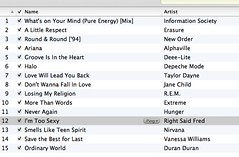
I'm working on a series of essays that focus on my life from 1988-93, which are my undergraduate years (though the essays are not really about college). I've been thinking for a while of creating a playlist of songs from the time because music was always in the background, whether from my car radio, my CD player when I was riding the bus, or the background in bars and clubs. Thanks to Wikipedia, I am able to find out when the songs were released and put them in order. But that's not just my Virgo mentality at work. I can look at the list and see a kind of progression, my transition from boyhood to manhood. I just set my timer for twenty minutes today and got the list started. It'll be fun to listen to on the treadmill, though I better have a notebook handy for the memories that arise.
If anyone can think of any songs from that time period, feel free to let me know in the comments. My only rules for including them on the playlist are 1) only one song from an artist or I'll end up putting all of Depeche Mode's Violator and R.E.M.'s Out of Time on the list and 2) they have to be something that played a role, however minor, in my own life. Perhaps your memories might trigger some of my own. You can click on the image to enlarge it.
Saturday, December 31, 2011
What I Learned in 2011
- Just because everyone else is excited about it doesn't mean I have to be.
- You really cannot over-prepare for the financial side of a sabbatical.
- The opposite of holding a grudge is not re-inviting someone back into my life. Sometimes it is just better to say, "That's in the past, and I'm now in a good place in my life. I wish you the same." And then let go.
- Just get the work done.
- I cannot think or write in soundbites, and that is fine.
- New York City is best nine floors up.
- I prefer Facebook over Google+ because I do not like picking and choosing who gets what from me; I'd rather throw it all out there and let other people pick and choose what they want (if anything).
- The less I carry with me, the happier I am; I mean that literally, but it works figuratively, too.
- When my mother died, my life changed forever. There was a time to grieve what I lost. Now is the time to celebrate the life I have, which she gave me.
- Schadenfreude may have its place in life, but it's a small one.
- I have no reason ever to step on a scale again because it is better to pay attention to the numbers on my blood pressure machine than the numbers on a scale. Even during my annual physical, I can tell the doctor I don't want to know what the scale says even if he does.
- Diet and exercise are words I don't want or need to use in my life.
- There is value and pleasure in reading fiction.
- How many times do I have to be hit across the head before I ask, "Excuse me. What was that again?" Actually, asking that happens often; it's listening to the answer that needs to happen now.
- I'm missing out on less than I think I am.
Wednesday, December 28, 2011
My Most Memorable Reality-TV Moments of 2011
(Andy at Reality Blurred read a comment I made on Facebook and asked for people's thoughts on the best and worst of reality TV in 2011. I wrote what is below but lost my links when I tried to post it as a comment, so I'm posting it here and putting a link over there.)
I know I watch some different shows than many RB commentors, and I know some are going to cringe at what I think were some reality-TV highlights this year. For me, a high point was America's Next Top Model All-Stars (and the cringing has started). For those of us who are fans, it was a great season mainly because just about everyone on the show was good, and the show focused mostly on their work as models and not as much on in-house drama. The finale was a shock to many because something looked off, and that's because it was. Whatever happened, Lisa D'Amato won, which is what I find fascinating because she appeared previously on the third season of Celebrity Rehab and was number ten on the Top Ten Villains on Reality TV (back in 2008). She brought drama, not talent. But I was proven wrong. She was never drunk and never talked to any shrubbery. Instead, she won challenges and photo shoots. She looked serious and driven. I had never seen this Lisa before, and I admit she impressed me.
As another highlight, I loved the fact that Dustin won Top Shot 3, mainly because he had no military or law enforcement background. Top Shot 2 (which also aired in 2011) featured George, who may be a nice guy deep inside but acted like a child on the show, demeaning anyone who was not a marine. And if you wanted some drama, there was always MTV and The Challenge: Rivals and the fight between Paula and Laurel, which brought Paula's history with eating disorders center stage again.
I know I watch some different shows than many RB commentors, and I know some are going to cringe at what I think were some reality-TV highlights this year. For me, a high point was America's Next Top Model All-Stars (and the cringing has started). For those of us who are fans, it was a great season mainly because just about everyone on the show was good, and the show focused mostly on their work as models and not as much on in-house drama. The finale was a shock to many because something looked off, and that's because it was. Whatever happened, Lisa D'Amato won, which is what I find fascinating because she appeared previously on the third season of Celebrity Rehab and was number ten on the Top Ten Villains on Reality TV (back in 2008). She brought drama, not talent. But I was proven wrong. She was never drunk and never talked to any shrubbery. Instead, she won challenges and photo shoots. She looked serious and driven. I had never seen this Lisa before, and I admit she impressed me.
As another highlight, I loved the fact that Dustin won Top Shot 3, mainly because he had no military or law enforcement background. Top Shot 2 (which also aired in 2011) featured George, who may be a nice guy deep inside but acted like a child on the show, demeaning anyone who was not a marine. And if you wanted some drama, there was always MTV and The Challenge: Rivals and the fight between Paula and Laurel, which brought Paula's history with eating disorders center stage again.
Subscribe to:
Posts (Atom)